About
This is a new research group in the Department of Ecology and Evolutionary Biology at the University of Michigan.
Work focuses on the impacts of global change on the ecology and evolution of infectious diseases, particularly vector-borne and environmentally-mediated pathogens. Work in the lab uses a combination of lab experiments, field surveys, and genomics. The overarching goal of this work is to advance strategies to protect both human and planetary health.
Press/News
- Our work on oil and gas construction and Valley fever is covered by KGET News, Berkeley Public Health and Bakersfield News. Sept 2026
- The LA Times covers our work on vector-borne disease in California under environmental change. Aug 2026
- Lisa speaks with the LEO Network in Alaska about mosquito-borne disease in a changing world. Webinar link here. June 2026
- Berkeley News covers our work on locally-acquired dengue in California. June 2026
- The LA Times and the LA Public Press discuss our work in the context of Aedes aegypti control in California. September 2026, June 2026
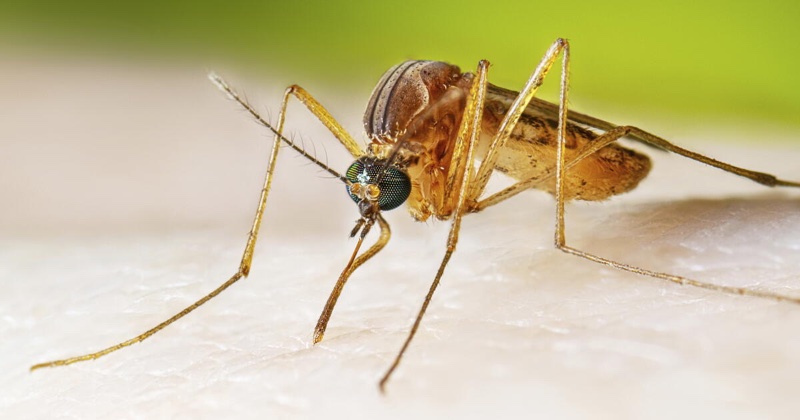 Los Angeles Times · Aug 2026
Are mosquitoes, ticks and fleas turning California into a disease hotspot?
Los Angeles Times · Aug 2026
Are mosquitoes, ticks and fleas turning California into a disease hotspot?